How to Choose the Right Explosion-Proof Crane Certification
menu_open
Content Quick Link
Most Important Takeaway:
Selecting the correct explosion-proof crane certification for your project location is critical to avoid regulatory issues, hidden costs, project delays, and tender rejections. For procurement managers, early verification of local requirements ensures safe, compliant, and cost-effective crane deployment.- Which explosion-proof crane certification is required for Europe, China, Middle East, or North America?
- How to match certification to project type (oil & gas, chemical, manufacturing)?
- Common mistakes in tender specification compliance for explosion-proof cranes.
- Hidden approval and inspection costs tied to different certifications.
- Practical steps for buyers to verify certification compatibility before purchase.
- How choosing the right certification impacts long-term operation, safety, and maintenance.
Introduction
Explosion-proof cranes are not just heavy machinery—they’re safety-critical equipment for environments where sparks, heat, or electrical faults could trigger fires or explosions. You’ll find them in chemical plants, oil refineries, gas processing facilities, and even some manufacturing sites where hazardous dust or gases are present. Installing the right crane is not enough; it must also be certified for the specific environment it operates in.
For procurement managers, this is where it gets tricky. Selecting the wrong certification can cause headaches: projects can be delayed, tenders rejected, or worse, unsafe operations that put people and assets at risk. It’s not just about buying a crane; it’s about ensuring it can legally and safely operate in your project’s location.
This guide focuses on three main angles:
- How certifications vary depending on geography.
- How project type affects the required compliance level.
- Common pitfalls and hidden costs associated with explosion-proof certifications.
By the end, you’ll have practical knowledge to avoid costly mistakes and make informed procurement decisions.
Explosion-Proof Crane Certifications
Before you start comparing brands or models, it's essential to understand what an explosion-proof certification really means. In simple terms, it's proof that a crane meets specific safety standards for hazardous areas, such as zones with flammable gases, vapors, or dust. Without the correct certification, your crane may not be approved for use, even if it's technically capable.
Key Certifications to Know
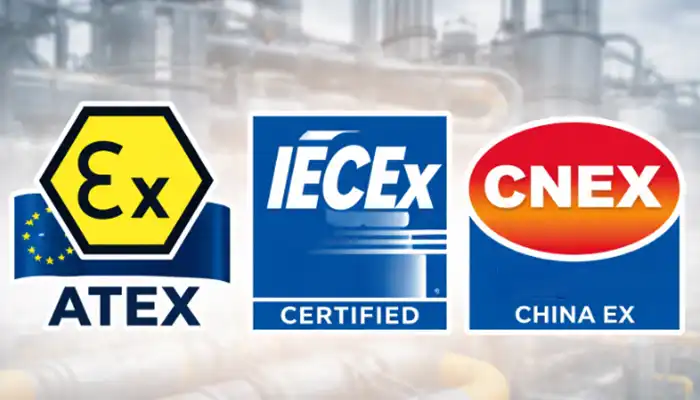
- ATEX (European Union)
Mandatory for projects in Europe, especially for chemical plants and oil refineries. ATEX zones classify the risk level, and the crane must match the specific zone classification (Zone 1, Zone 2, Zone 21, Zone 22). - IECEx / EPC (International or China export)
Widely recognized for projects outside China or for export-oriented operations. These certifications confirm that the crane meets international safety standards for hazardous environments. - CCC (China Compulsory Certification)
Required for cranes used in domestic projects within China. CCC ensures local regulatory compliance and acceptance by Chinese authorities. - UL / CSA / NEC (North America)
Primarily used for U.S. and Canadian projects. While some North American facilities accept IECEx, local compliance ensures smooth approval and operation.
Why It Matters
- Using a crane without proper certification can delay project approval.
- Cross-border projects may require multiple certifications to satisfy local regulations.
- Some certifications have specific maintenance and inspection requirements, which you need to budget for early.
Practical Notes for Buyers
- Always check the project's hazardous zone classification before selecting a crane.
- Confirm whether your location recognizes international certifications like IECEx or EPC.
- Factor in any additional inspection or re-certification costs if the crane is shipped across borders.
Matching Certification to Project Location
Choosing the right explosion-proof crane isn't just about picking a certified model—it's about matching the certification to where the crane will actually operate. Different regions enforce different standards, and overlooking this can cause delays, extra costs, or even legal issues. Let's break it down by region.
Europe (EU / ATEX)
For any project inside the European Union, ATEX certification is mandatory. This isn't just a recommendation—regulators won't approve your crane without it. ATEX ensures the crane is safe to operate in areas where flammable gases, vapors, or dust exist.
- Zone Classification Matters: ATEX divides hazardous areas into zones based on risk level:
Zone 1 / Zone 2: Flammable gas or vapor. Zone 21 / Zone 22: Combustible dust.
Each zone requires cranes to meet specific design and safety requirements. For example, a crane for Zone 1 must have stricter electrical insulation and spark prevention than one for Zone 2. - Practical Tip: Check the facility's hazardous area map before requesting quotations. Some buyers assume any ATEX-certified crane will work everywhere in the EU—but using a Zone 1 crane in a Zone 2 area might be overkill, adding unnecessary costs.
China (CCC / EPC / IECEx)
China has its own local and export-oriented requirements. For domestic projects, CCC certification is generally required. This ensures the crane is approved by Chinese authorities and legally usable on-site.
- Export Projects: If you're supplying cranes for a Chinese company but for use abroad, EPC or IECEx certifications may be accepted instead of CCC. These international standards allow easier shipping and compliance in multiple countries.
- Practical Tip: Even if IECEx is recognized internationally, some local Chinese authorities may still require a CCC sticker for domestic inspection. Buyers often miss this and face delays at customs or during commissioning.
Middle East & Southeast Asia
These regions often rely on IECEx certifications, but some countries also accept ATEX if specified in local regulations. Rules vary widely between countries, so it's important to check the local authority or project tender.
- Practical Consideration: If you're tendering for a chemical plant in Saudi Arabia or an oil terminal in Malaysia, confirm which certification is recognized. Some tenders require dual certificates (IECEx + ATEX) to satisfy both international and local inspectors.
North America (USA / Canada)
In the U.S. and Canada, NEC, UL, or CSA certifications are the standard. These certifications ensure compliance with local electrical and fire codes.
- Cross-recognition: Some facilities will accept IECEx-certified cranes, but always verify in advance. For high-risk areas, UL-listed or CSA-approved cranes may still be required.
- Practical Tip: Buyers sometimes assume that an IECEx or ATEX crane automatically meets U.S. standards—but electrical wiring, grounding, and explosion-proof housings may differ, requiring additional inspection or modification.
Summary / Practical Advice
- Always confirm local regulations before finalizing procurement.
- Zone classification matters as much as the certification itself.
- For cross-border projects, consider dual or multiple certifications to avoid inspection delays.
- Factor in inspection, approval, and hidden compliance costs when planning budgets.
Project Type and Certification Relevance
The type of facility directly determines what explosion-proof certification your crane needs. Risk level, materials handled, and hazardous zone classification are the key factors. Choosing the wrong certification can delay approvals or cause safety issues.
Oil & Gas Facilities
High-risk areas with flammable gases or vapors require the strictest compliance.
- Certifications: ATEX (EU), IECEx (international/export)
- Zones: Typically Zone 1 (continuous risk) or Zone 2 (occasional risk)
Practical Details:
- All motors, hoists, and electrical components must be fully explosion-proof.
- Confirm the exact zone with the facility's safety or engineering team.
- Consider operational conditions: temperature, humidity, and potential gas leaks can affect crane performance.
Chemical Plants / Refineries
These facilities often have mixed hazards—flammable gases and combustible dust.
- Certifications: ATEX (EU), IECEx (international)
- Zones: Zone 1/2 for gases, Zone 21/22 for dust
Practical Details:
- Some plants have multiple hazard zones; a crane may need dual certification.
- Check whether the crane will operate in both gas and dust areas—this impacts hoist design, enclosures, and maintenance schedule.
- Electrical panels, limit switches, and emergency stops must comply with zone-specific requirements.
Manufacturing / Light-Risk Facilities
Lower-risk facilities often handle dust hazards but no flammable gases.
- Certifications: IECEx or recognized local standards
- Zones: Usually Zone 22 (dust)
Practical Details:
- Verify tender or local inspection requirements; some inspectors require documented proof even for low-risk zones.
- Hoist speed and load control may differ for dust zones compared with gas zones.
- Maintenance intervals may be less strict but should still follow manufacturer guidelines.
Quick Takeaways for Buyers
- Oil & gas → strict ATEX/IECEx, Zone 1/2 compliance essential.
- Chemical plants → dual certifications often required; check zones carefully.
- Light-risk manufacturing → IECEx or local certification may suffice, but always confirm.
- Always review hazardous zone classification, materials handled, and tender requirements before ordering a crane.
- Early verification saves time, reduces hidden costs, and ensures operational safety.
Common Mistakes in Certification Selection
Choosing the wrong explosion-proof crane certification can lead to delays, extra costs, or safety issues. Procurement managers should be aware of these frequent errors and how to avoid them.
Assuming One Certification Fits All
- Problem: Believing ATEX, IECEx, or CCC is accepted worldwide.
- Impact: Crane may be rejected in certain regions, causing project delays.
- Solution: Confirm the crane's certification is recognized by local authorities and project tender documents.
Ignoring Local Regulations or Tender Requirements
- Problem: Overlooking specific requirements in tender documents.
- Impact: Project approval may be denied even if the crane is technically compliant.
- Solution: Review tender specifications carefully and consult with local inspectors or engineering teams.
- SEO Keywords: crane tender compliance, local authority explosion-proof crane approval
Choosing the Cheapest Certification
- Problem: Selecting a low-cost certificate without considering site acceptance.
- Impact: Re-certification, extra inspections, and delays can outweigh initial savings.
- Solution: Compare both certification cost and regulatory acceptance before purchase.
Misclassifying Hazardous Zones or Risk Levels
- Problem: Buying a Zone 2 crane for a Zone 1 area or misjudging project risk.
- Impact: Safety risks, inspection failures, or tender rejection.
- Solution: Verify hazard maps and zone classification with facility engineers before ordering.
5. Overlooking Maintenance and Inspection Obligations
- Problem: Ignoring ongoing inspection and maintenance requirements tied to the certification.
- Impact: Voided warranties, regulatory non-compliance, and operational downtime.
- Solution: Include maintenance and inspection schedules in procurement planning.
Quick Reference
- Check certification recognition by region – don't assume universal acceptance.
- Follow tender and local regulations – avoid rejection or delays.
- Factor in real costs – cheapest certification may be costly later.
- Verify hazardous zones – ensure crane matches actual project risk.
- Plan maintenance & inspections – compliance doesn't end at purchase.
Hidden Approval Costs
Even after selecting the right explosion-proof crane, many procurement managers are surprised by hidden costs associated with approvals, inspections, and cross-border compliance. These costs can add up quickly if not considered upfront.
Cross-Border Re-Certification Fees
- What it is: Cranes exported from one country may require re-certification to meet the standards of the destination country.
- Why it matters: Even a crane with IECEx certification may need local certification or testing when entering a new market.
- Practical Tip: Include potential re-certification costs in your procurement budget to avoid surprises.
Local Inspection or Commissioning Approvals
- What it is: Some authorities require on-site inspections before the crane can be commissioned.
- Why it matters: Inspection fees, travel for inspectors, or additional testing can increase project costs.
- Practical Tip: Check local rules early—some regions will not allow operation until inspection paperwork is complete.
Delays from Mismatched Certifications
- What it is: Using a crane certified under the wrong standard can lead to delayed commissioning or tender rejection.
- Why it matters: Every week of delay can affect production timelines and increase labor or rental costs.
- Practical Tip: Verify certification compatibility with both the project location and tender documents before purchase.
Long-Term Operational Impacts
- What it is: Certification affects ongoing requirements for insurance, warranty, and liability.
- Why it matters: Using a crane without proper certification may void insurance coverage or manufacturer warranties.
- Practical Tip: Factor insurance, warranty, and compliance costs into your total project budget.
Quick Takeaways
- Hidden costs often exceed the upfront price of the crane.
- Plan for cross-border certification, local inspections, and approval fees.
- Verify certification compatibility early to avoid delays.
- Consider insurance, warranty, and liability implications in procurement decisions.
Practical Steps for Buyers / Procurement Managers
Choosing the right explosion-proof crane is not just about the model—it's about ensuring compliance, safety, and smooth project execution. Here's a practical, step-by-step approach for procurement managers.
Identify Project Location and Regulatory Authority
- Why it matters: Different countries and regions enforce different standards.
- Action: Confirm whether ATEX, IECEx, CCC, UL, or CSA is required for your project.
- Practical Tip: Don't assume a globally recognized certificate is automatically accepted locally.
Determine Project Risk Level and Hazardous Zone Classification
- Why it matters: Zone classification directly affects crane design and certification requirements.
- Action: Map out zones (Zone 1/2 for gases, Zone 21/22 for dust) and confirm with facility engineers.
- Practical Tip: Check if the crane will operate across multiple zones—this may require dual certification.
Verify Certification Compatibility
- Why it matters: Using the wrong certification can lead to inspection failure or tender rejection.
- Action: Compare the crane's certification with local law and tender specifications.
- Practical Tip: Request documented proof of compliance from suppliers before purchase.
Factor in Hidden Costs and Timelines
- Why it matters: Approval, inspection, and cross-border compliance can significantly affect project budgets.
- Action: Include potential re-certification, local inspection, and commissioning fees in your planning.
- Practical Tip: Build extra time into project schedules for approvals and inspections.
Engage Suppliers Offering Multiple Certifications
- Why it matters: Suppliers with multiple internationally recognized certifications reduce risk and ensure smooth approvals.
- Action: Confirm the supplier can provide ATEX, IECEx, CCC, or UL/CSA as needed.
- Practical Tip: Ask for references or examples of projects completed in your region.
Confirm Inspection, Maintenance, and Warranty Obligations
- Why it matters: Certification often comes with ongoing maintenance, inspection, and documentation requirements.
- Action: Review the manufacturer's inspection intervals, maintenance schedule, and warranty terms.
- Practical Tip: Include these obligations in your procurement checklist to avoid surprises.
Quick Takeaways
- Start with location and regulatory requirements.
- Map out hazardous zones and risk levels.
- Ensure certification matches local law and tender requirements.
- Include hidden costs and timeline buffers.
- Work with suppliers offering multiple certifications.
- Confirm inspection, maintenance, and warranty responsibilities.
Case Studies
Understanding how explosion-proof certifications apply in actual projects is key for procurement managers. Here are three real-world scenarios showing how location, project type, and regulations affect crane selection.
Case 1: European Chemical Plant
A chemical facility in Germany handles flammable liquids across multiple zones. The procurement team initially considered an IECEx-certified crane, thinking it would be enough. However, EU regulations require ATEX certification for Zone 1 and Zone 2 areas.
- Lesson Learned: IECEx alone cannot replace ATEX in Europe.
- Actionable Advice: Always confirm both the hazardous zone classification and local tender requirements before finalizing a crane.
Case 2: China-Based Oil Storage Facility
An oil terminal in China planned to install cranes for domestic and export operations. Domestic operations required CCC certification, while cranes intended for export also needed EPC or IECEx approval. The team realized late in the project that importing a crane with IECEx only would cause customs delays.
- Lesson Learned: Local certification (CCC) is mandatory for domestic projects, even if the crane has international certifications.
- Actionable Advice: Plan early for dual certification if the crane will be used domestically and exported.
Case 3: Middle East Industrial Project
A chemical and dust-handling facility in Saudi Arabia considered ATEX-certified cranes. After checking local regulations, they found IECEx certification with local inspection approval was sufficient, and ATEX was not always required.
- Lesson Learned: Local authority approval can sometimes replace a full ATEX certificate, but this varies by country.
- Actionable Advice: Always verify regional authority acceptance to avoid unnecessary certification costs.
Key Takeaways from Real Projects
- Certification requirements vary by region, project type, and hazardous zone.
- International certificates like IECEx are valuable but may still need local inspection or approval.
- Dual certifications can reduce risk for cranes operating across multiple zones or borders.
- Early planning prevents hidden costs, delays, and tender issues.
Conclusion
Choosing the right explosion-proof crane certification isn’t optional—it’s a key procurement decision that affects safety, compliance, and project success. Matching the certification to your project location, hazardous zone, and facility type ensures:
- Safe operations in hazardous environments.
- Smooth tender approval and regulatory compliance.
- Avoidance of hidden costs, delays, and operational risks.
Final Advice for Buyers
- Verify local regulations early: Don’t assume one certification works everywhere.
- Engage suppliers with multiple certifications (ATEX, IECEx, CCC, UL/CSA) to reduce risk.
- Factor in hidden costs: Include inspection, commissioning, and approval fees in your budget.
- Check maintenance and warranty obligations tied to each certification.
By planning carefully and aligning certification with your project’s location, risk level, and tender requirements, you can prevent costly delays, ensure compliance, and secure safe operations for years to come.

Article by Bella ,who has been in the hoist and crane field since 2016. Bella provides overhead crane & gantry crane consultation services for clients who need a customized overhead travelling crane solution.Contact her to get free consultation.